What is oud? A guide to the scent, the wood, and why it works so beautifully in home fragrance
Written by Ollie RussellWe have always found that oud arrives before it is fully understood. The name is familiar, often spoken in the same breath as rose, saffron and smoke, yet the material itself can still feel elusive. In fragrance, oud is associated with depth, warmth and ceremony; in the home, it creates an atmosphere that feels transporting—less a simple woody note than something far more enveloping.
So, what is oud? What does oud smell like? And why does it lend itself so well to home fragrance? Below, we have set out a considered guide to one of perfumery’s most storied materials, along with a few places to begin if you feel drawn to the note.
What is oud?
When we talk about oud, we are referring to the fragrant resinous wood formed within certain Aquilaria trees after a natural biological process affects the heartwood. That dark, aromatic wood is commonly called agarwood, while oud is the term most often used in fragrance.
In other words, oud is not simply a perfume fantasy or a passing marketing term. It is a real aromatic material with centuries of use, especially in incense traditions and perfumery. In modern fragrance, however, many oud scents are created as accords—carefully balanced blends designed to evoke the character of oud—because natural oud is rare, costly and exceptionally potent.
What does oud smell like?
This is the question we are asked most often, and understandably so, because oud rarely smells like one thing alone.
To us, oud scent is best described as woody, warm, resinous and smoky, with facets that can feel sweet, leathery, balsamic, musky or gently animalic depending on how it is interpreted. Some compositions lean dark and incense-like; others are softened by florals, vanilla or amber, giving oud a rounder, more velvety presence.
For the home, this complexity is precisely what makes oud so compelling. A well-balanced oud fragrance should not feel harsh or overly dense. Instead, it should create depth: the sense of warm wood, shadowed interiors, quiet spice and something faintly ceremonial lingering in the air.
Is oud always heavy?
Not necessarily.
Oud has a reputation for intensity, but much depends on what it is paired with. Rose can make it feel plush and full. Saffron can draw out its warmth. Vanilla can make it smoother, almost creamy in softness. Citrus or peony can lift it, giving it light and shape.
This is why oud works across very different fragrance directions. In one setting it feels dusky and meditative; in another, polished and floral. We have always thought the best oud fragrances balance richness with clarity rather than relying on weight alone.
How is oud used in home fragrance?
In home fragrance, oud is often used as a base note or anchoring note. It gives a scent longevity, presence and structure. Where brighter notes may lift or open a fragrance, oud provides the slower, more enveloping finish—the part that makes a room feel settled and complete.
That is what makes oud especially effective in the home, where fragrance unfolds gradually and shapes the atmosphere of a space. Whether used in a candle, reed diffuser or another home-fragrance format, oud can bring warmth to evenings, definition to larger rooms and a more cocooning atmosphere in cooler months. It also layers beautifully with florals, ambered notes and spice-led compositions, which is why it appears so often in more opulent or destination-led scent profiles.
Why oud is so closely associated with travel
We think oud carries an unusually strong sense of place. Its story stretches across Southeast Asia, South Asia and the Middle East, where agarwood has long held cultural, ceremonial and aromatic significance. That geographical and cultural breadth is part of why oud feels so transportive in fragrance: it suggests not only wood and smoke, but ritual, architecture, textiles, evening air, and the quiet drama of a city after dark.
For Russell + White, that sense of travel feels especially fitting. Our Oud Fortune collection is inspired by Istanbul, a city suspended between continents, where florals, spice and precious woods sit naturally alongside one another.
What does oud smell like in Russell + White’s world?
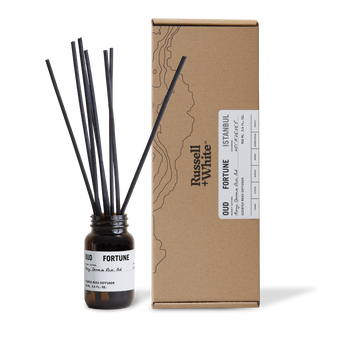
In our world, oud is never about heaviness for its own sake. In Oud Fortune, we have interpreted it through peony and damask rose, creating something more nuanced: floral first, then woody, with a resinous depth beneath. It is our way of showing how oud can feel generous and enveloping without becoming overpowering.
This also makes it a good place to begin if you are curious about oud scent but unsure whether it may feel too austere. The rose gives it bloom; the oud gives it gravity.
For a different mood, our limited-edition OCTOBER25 candle inspired by Muscat, offers a spicier, fruitier and woodier atmosphere—more warm stone, lantern glow and souq spices than floral opulence. While it is not an oud-led scent, it sits naturally alongside it for those drawn to deeper, more atmospheric fragrance families.
Who is oud home fragrance suited to?
We would usually recommend oud in the home to someone who enjoys fragrances with:
- woody depth
- floral, amber or spice-led character
- a more evening-leaning atmosphere
- warmth, richness and a sense of quiet drama
It can also suit those who already gravitate towards sandalwood, patchouli or incense notes but want something with a little more intrigue and contrast.
How to style oud at home
We think oud comes into its own in rooms where you want atmosphere to linger: living rooms in the evening, bedrooms with low lamplight, hallways that set a tone on arrival. It pairs especially well with natural textures—wood, stone, linen, old brass—and with spaces that feel collected rather than overly polished.
We tend to think of it less in terms of brightness and more in terms of mood: the hush of a hotel corridor, the coolness of carved stone, the glow of a lamp lit just before dusk. Oud has a way of making a room feel travelled.